
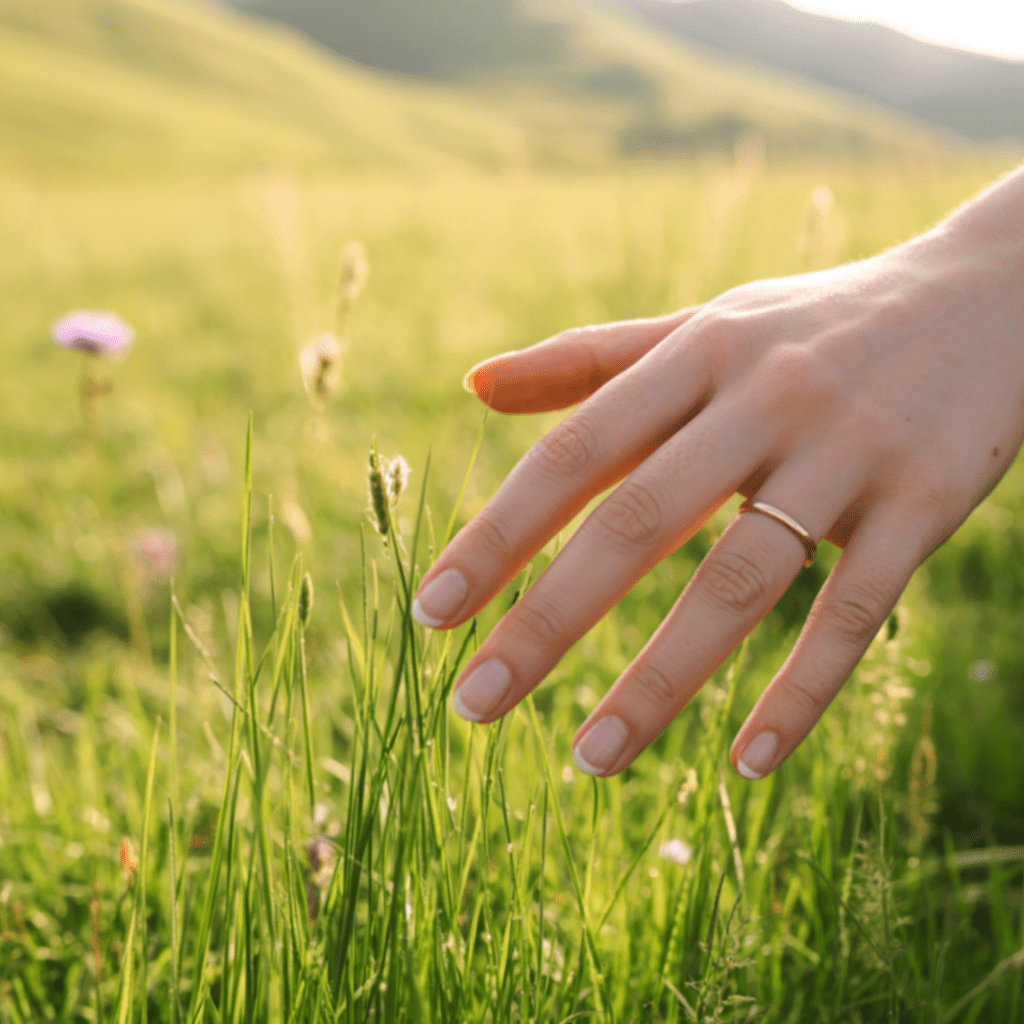
There’s a reason “touch grass” became a thing people say. Somewhere along the way, a lot of us drifted inside – into our screens and four walls – and kind of forgot to come back out. And after a Canadian winter, that drift is real. The couch is warm. The outdoors is not. It makes complete sense.
But spring is here, and something worth knowing is that going back outside isn’t just nice, it’s genuinely good for you real, biological ways that might surprise you.
Let’s talk about what actually happens when you step back out the door.
What Being Outside Does for Your Head
There’s a quiet movement happening that you may have noticed in your own life or among people you know. People are putting their phones down more intentionally. Choosing a walk without a podcast. Sitting outside without pulling out a screen. This “analog trend,” is not really about rejecting technology, but it is about remembering what it feels like to just be somewhere, without also being somewhere else.
It turns out that this matters more than we might think.
There’s a concept in psychology called attention restoration – the idea that the brain has two modes of attention. One is directed attention, the kind we use when we’re working, scrolling, problem-solving, or consuming content. It’s effortful, and it depletes. The other is involuntary attention, the soft, wandering focus that kicks in when you’re watching clouds move, listening to birds or walking without a particular destination. Natural environments are uniquely good at activating this second mode. Being outside, especially without a screen, gives your directed attention a genuine rest in a way that sitting on the couch watching television simply doesn’t.
What this means in practice: the walk where your thoughts just drift – where you’re not listening to anything, not checking anything, just moving through the world – is actually doing something. The wandering mind isn’t wasting time. It’s processing, consolidating, restoring. Some of the best thinking happens when we stop trying to think!
There’s also the social layer, which is easy to underestimate. The kind of connection that happens outside – running into a neighbour, stopping to chat with someone walking their dog, a familiar face across the street – is different from scheduled connection. It’s lighter, more spontaneous, and surprisingly good for us. Researchers who study loneliness and community consistently find that these small, unplanned moments of contact are meaningful. They remind us that we’re part of a place, not just living alongside it.
What Being Outside Does for Your Body
The mental benefits are real, but the physical ones are just as interesting and, after a Canadian winter, your body is probably ready for all of them.
Fresh air and oxygen
Indoor air, especially after months of heating and recirculating, is genuinely different from outdoor air. Fresh air carries higher oxygen levels, and better oxygen flow supports energy production, mental clarity, and mood in ways that are measurable rather than just felt. It also affects serotonin – the neurotransmitter most closely connected to how we feel day to day. More natural light and more fresh air both contribute to its release. This is a big part of why people feel noticeably better after time outside, not just in their head but in their body.
Vitamin D – the Canadian reality
Here’s something worth knowing: according to Statistics Canada, the number of Canadians with vitamin D levels low enough to affect bone health more than doubles during the winter months. By the time spring arrives, a very large number of us are running low on a nutrient that supports immune function, mood, muscle strength, and energy. That “flat” feeling that lingers into April? Sometimes it’s vitamin D.
The good news is that your skin begins producing it again the moment you get outside in spring sunlight. Even on a cool, partly cloudy day. The less good news is that levels depleted over a long winter take time to rebuild, which is why continuing a good quality vitamin D supplement through spring still makes sense for most people, even as you get back outside. If you’re not sure what you’re taking or whether it’s enough, come talk to us. This is exactly the kind of thing we’re here for.
Grounding – the part about actually touching the grass
There’s a practice called earthing, or grounding, that’s been getting more attention lately and it’s worth knowing about, with honest context. The idea is that when bare skin contacts the earth’s surface directly (grass, soil, sand), there’s an exchange of electrons between the ground and your body that may help reduce inflammation, calm the nervous system, and support sleep quality. Some early research supports this. The science is still developing, and we’ll be straightforward that the studies so far are small and more research is needed.
What’s harder to argue with is the experience of it. Most people who have stood barefoot in the grass on a warm spring day know exactly what we’re talking about. Whether that’s biology, or simply the act of slowing down enough to feel the ground beneath your feet, the effect tends to be real. So when the ground dries out and the moment presents itself this spring – kick off your shoes for a few minutes. It costs nothing, and it’s worth finding out for yourself.
Your Spring Homework: A Nature Treasure Hunt
With all of the new knowledge above on the benefits of getting back outside, we put together a little spring treasure hunt. Ten things to watch, listen, and feel for on your next walk, whether you’re by yourself, with a friend, or with kids in tow.
Print it out, screenshot it, or just read it before you head out the door.
The world is waking back up out there. It’s worth paying attention.
Find all ten on your next walk outside.
☐ A bird you can hear but not see
☐ Something that is a colour you didn’t expect to find outside
☐ The smell of thawing earth or wet grass
☐ A tree that is just starting to bud
☐ An insect — any insect — the first one you’ve spotted this season
☐ A puddle, a stream, or any moving water
☐ Evidence that an animal has been somewhere recently (tracks, digging, a nest, or something half-eaten)
☐ A cloud formation worth actually stopping to look at
☐ Something small on the ground you would have walked past without noticing – look closer
☐ A moment where you forget to think about anything else
Bonus: Leave your phone in your pocket for the whole walk.
Questions about what your body might need coming out of winter? Vitamin D, magnesium, something to support your energy as the season shifts — come find us in store. We love this kind of conversation!